

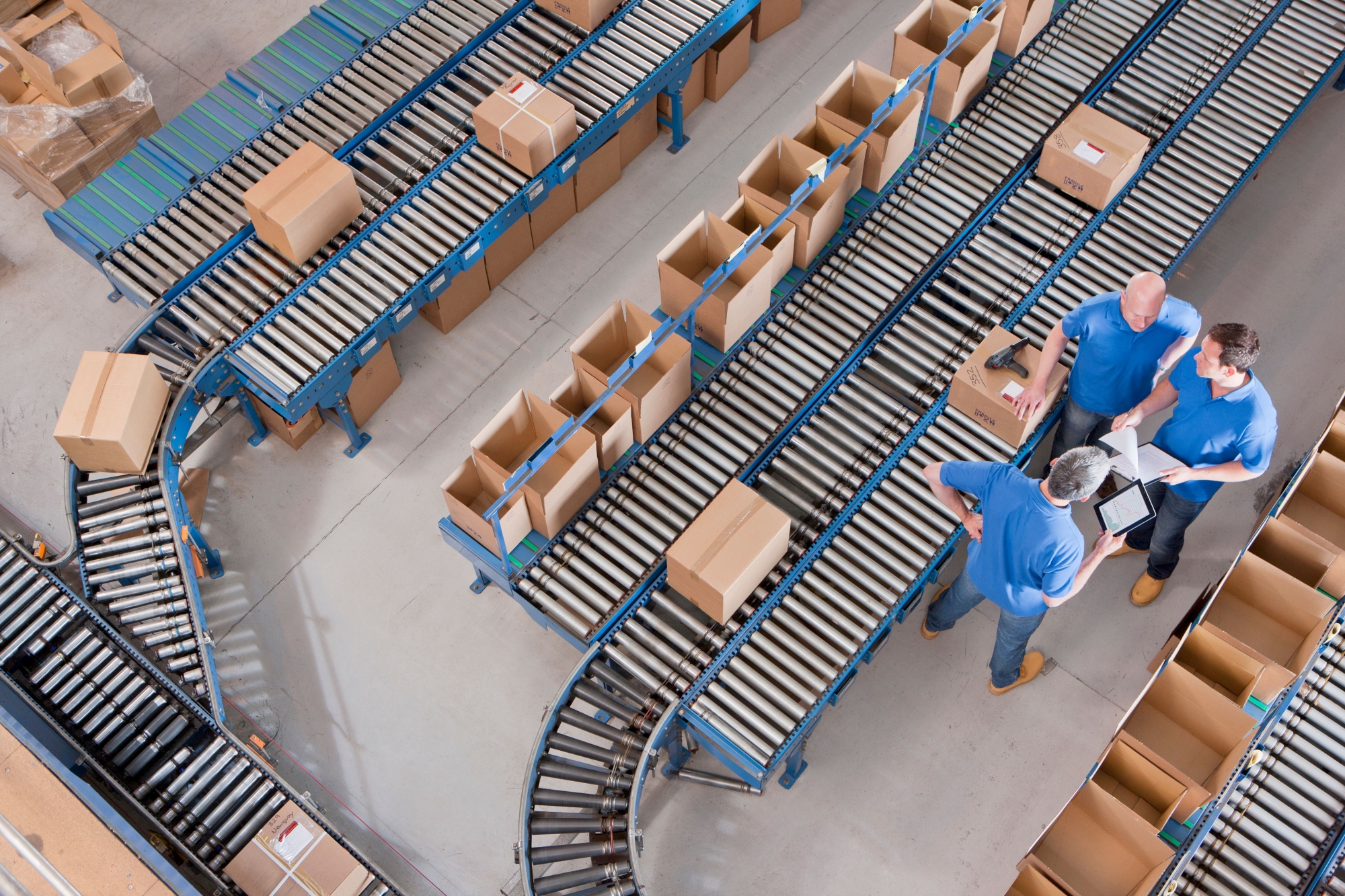

7 characteristics of a best-in-class warehouse

What really sets mature warehouse organisations apart
When you step into such a warehouse, you often sense it straight away. Everything runs smoothly and problems are tackled systematically. That sense of calm does not arise by chance. It is the result of years of work on processes, systems, staff, data and management.
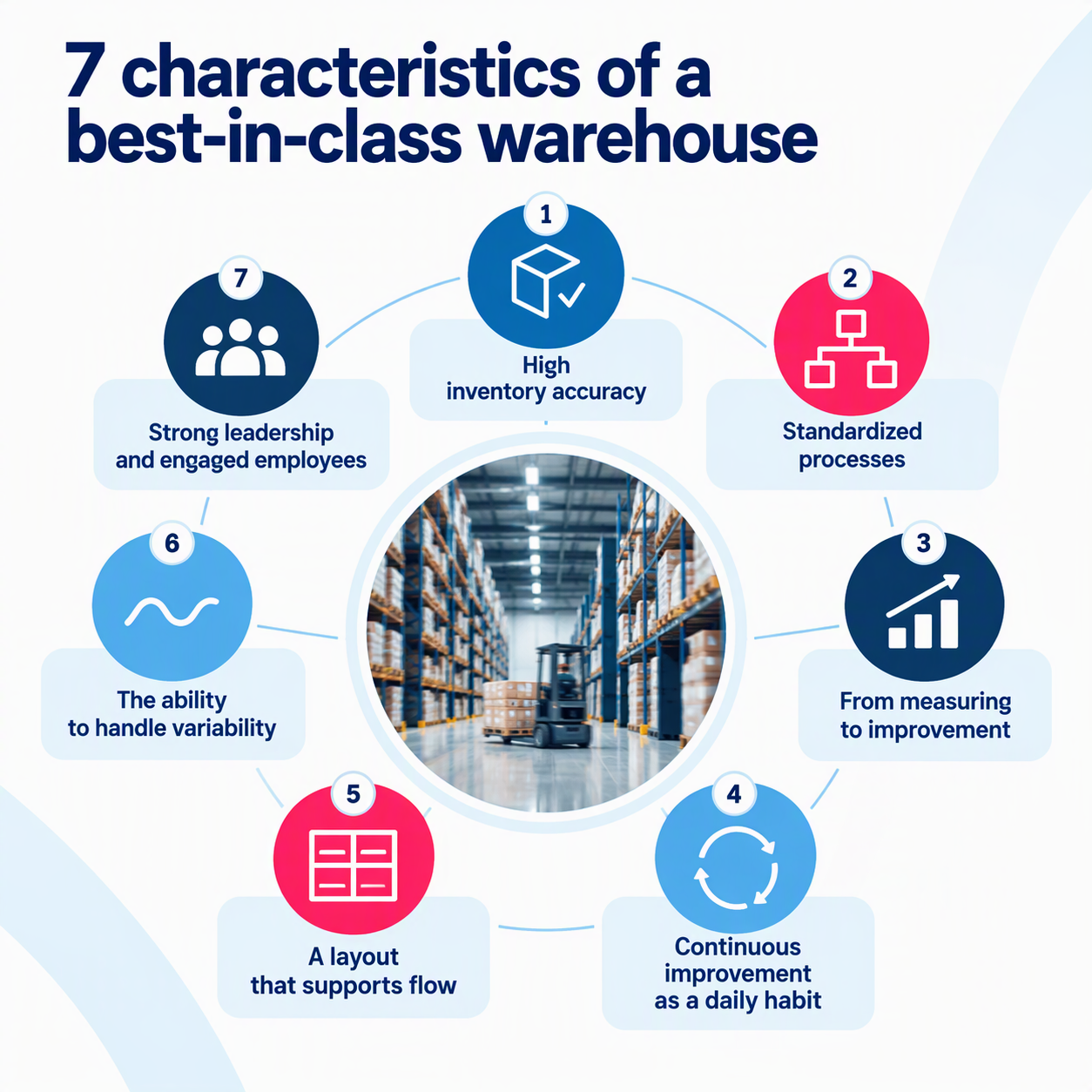
1. High inventory accuracy
This is the first characteristic that is essential for a high-performing warehouse. After all, when stock data is unreliable, it leads to stock-outs, search operations, rush orders and disruptions across the entire supply chain.
Mature warehouses aim for an inventory accuracy of over 99 per cent. But that figure in itself does not mean much. It is primarily an indication that recording, location management, scanning discipline and problem-solving are systematically under control.
Typical levers for achieving this are:
- cycle counting
- root cause analysis of stock discrepancies
- clear agreements on location and batch management, and
- strong process discipline regarding scanning and recording.
In this way, stock accuracy helps determine how effectively other departments (particularly planning, procurement, customer service and transport) can operate.
2. Standardised processes
A recurring theme in virtually every warehouse assessment is so-called process variation. The same task is carried out slightly differently by different staff members, shifts or sites. Whilst this may appear flexible, in reality it leads to errors and unpredictability.
Best-in-class warehouses therefore place a strong emphasis on standardised working practices. Not to eliminate flexibility, but to create a stable foundation upon which improvement becomes possible. This results in clear, visual process standards, which are also linked to induction and training, and there are regular audits to check whether processes are still being followed.
Standardisation is therefore not merely an administrative exercise. It is, however, a prerequisite for identifying deviations and ensuring improvement. Because one principle remains true: without a standard, improvement is almost impossible.
3. From measurement to improvement
Virtually every warehouse today has dashboards, KPIs and reports. Yet, during warehouse assessments, we regularly see the same figures recurring week after week without any concrete actions or improvements resulting from them.
Best-in-class warehouses therefore use metrics not only to highlight performance, but above all to drive improvements. They look beyond the traditional KPIs (productivity, stock accuracy or OTIF) and seek to understand which underlying processes influence these results.
These primarily include:
- waiting times
- picking density
- replenishment efficiency and
- process stability.
The difference between a reporting organisation and a mature one therefore lies not in the act of measuring per se, but in what is done with the data afterwards. In this way, root causes are systematically analysed and improvement actions are followed up by the respective owners.
Measurement thus becomes the starting point of a continuous improvement cycle. It is precisely this discipline that ensures strong results are not a matter of chance, but are built up and safeguarded in a sustainable manner.
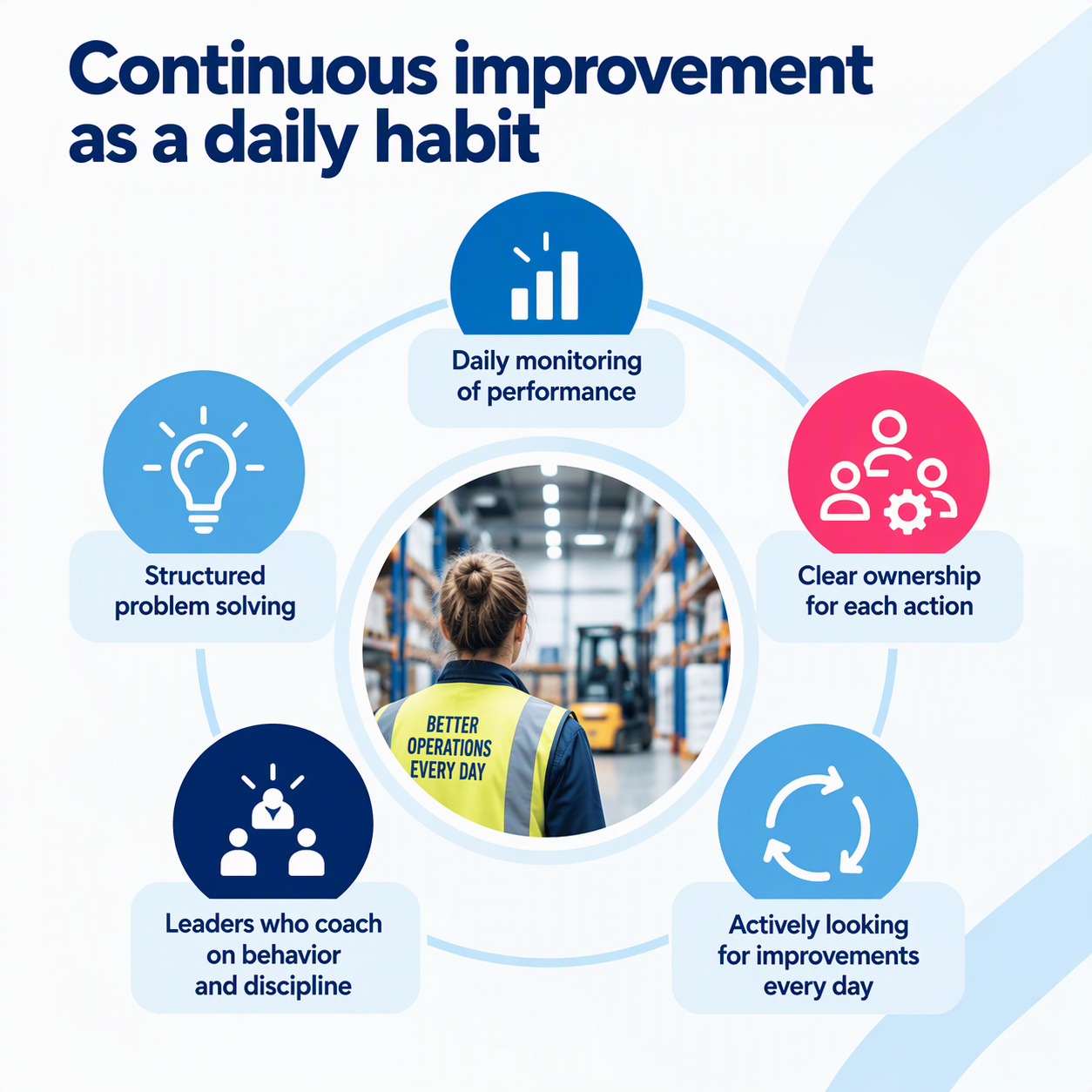
4. Continuous improvement as a daily habit
A fourth characteristic concerns the fact that improvement must be a way of working that permeates the entire organisation.
During consultancy projects at Stanwick, we often see organisations investing in a new dashboard, a layout optimisation or a WMS project. These are valuable initiatives, but without embedding, the effect often fades over time.
Mature warehouse organisations make continuous improvement part of their day-to-day operations. They do this through:
- daily performance monitoring
- structured problem-solving
- clear owners for every action and
- managers who coach on behaviour and discipline.
The strongest organisations do not just improve when problems arise. They actively seek opportunities to improve every day.
5. A layout that supports flow
A warehouse layout must support the logistical flow, not hinder it. Yet we often see warehouses that have grown organically over the years. New zones are added, temporary solutions eventually become permanent, and product flows also change significantly.
The result? Extra movements, double handling, more bottlenecks and, consequently, longer lead times.
Best-in-class warehouses, on the other hand, continuously review their layout from a flow perspective. They use ABC slotting, ensure logical product flows, minimise potential bottlenecks and tailor the various zones to volume and product mix.
Layout optimisation is therefore a key part of logistics optimisation. We could say that a mature layout evolves in line with operational realities.
6. The ability to cope with variation
Variation is now the norm rather than the exception. Peak volumes, forecast deviations, supplier issues and fluctuating demand mean that a warehouse must constantly adapt.
The difference between a reactive and a mature organisation does not lie in the absence of such variation, but in the way it is handled.
Mature warehouses therefore often invest in:
- cross-training of staff
- scenario-based planning
- capacity models and
- intelligently designed buffers.
As a result, they are less likely to be caught off guard by sudden changes and respond more quickly when they do occur. A warehouse that manages variation more effectively also enhances the agility of the entire supply chain.
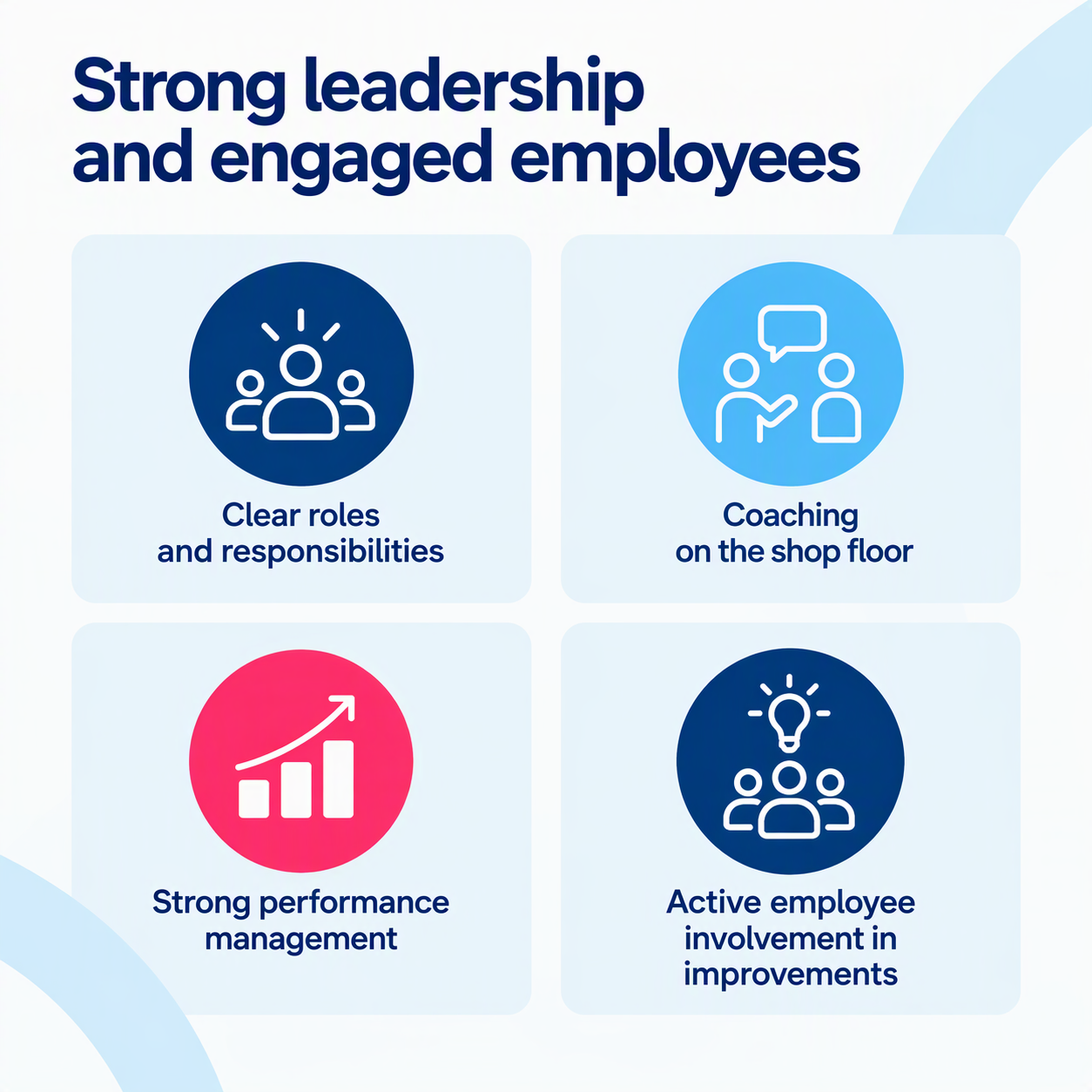
7. Strong leadership and engaged staff
A final characteristic that often makes the difference between a good and an excellent warehouse is how it is led.
The best processes, systems and KPIs are of little value if staff are not engaged. Mature organisations therefore invest not only in their processes, but also in their people.
They ensure:
- clear roles and responsibilities
- on-the-job coaching
- strong performance management and
- active employee involvement in improvements.
Sustainable improvement occurs when standards, KPIs and improvement actions are effectively translated into day-to-day behaviour on the shop floor.
What ultimately makes the real difference?
It should be clear that best-in-class warehouses do not stand out because they have better KPIs, more technology or a more modern infrastructure. Rather, it is because they have strong foundations: standardised processes, reliable data, engaged staff, effective leadership and a culture of continuous improvement.
This explains why two warehouses with comparable systems and resources can still achieve vastly different results. After all, the performance we see today is the result of the way the organisation works, learns and improves on a daily basis.
The real difference is therefore made by systematically strengthening the underlying maturity. In our view, this is precisely where the key to sustainable Warehouse Excellence lies.
Curious about how mature your warehouse is today?
Stanwick supports organizations in Belgium and Europe with warehouse optimization, supply chain transformations, and operational excellence initiatives. Through an objective warehouse maturity assessment, we identify strengths, risks, and opportunities for improvement, and together we build a realistic roadmap toward Warehouse Excellence.
Book a consultation about your Warehouse Excellence program or learn about Lean Logistics through Stanwick Academy.
Contact us so we can work on solutions together.

Stanwick. Drive for results
Stanwick offers result-oriented coaching programmes on operational excellence, project excellence and supply chain excellence with a focus on people, organisations and processes. We perform thorough assessments, develop clear roadmaps and implement and anchor improvements to guarantee sustainable results.
Our Stanwick Academy organises extensive training courses in which you learn together with a like-minded community about project management, continuous improvement, data-driven organisations, leadership and change management.